
Tag: Ranie Smith

  • Artist Highlight – Stanley Jordan

    Celebrating grammy-award nominated
    Stanley Jordan

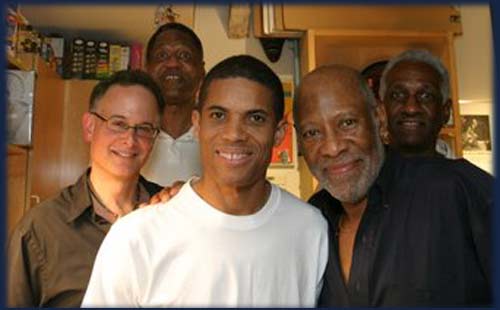
    Ranie Smith, Executive Director of the UC Jazz Club, honored Stanley Jordan at one of the first Ranie’s Jazz Salon functions. He held the function at Jim Dennis Photography Studio. Everyone had a wonderful time and I encourage you to get in touch with us to be put on this special invitation list. The gatherings are for UC Jazz Club members and the press only. Lloyd Gregory and Rolando Morales were present at the function to honor Stanley Jordan.

    Stanley Jordan performs “All Blues” of his “State of Nature CD”

    Stanley Jordan, world renowned musician and now holistic philosopher, has released a new CD “State of Nature”. It is a true gift. 

    “State of Nature” promises to become a hit. It combines Jordan’s magical ability to compose music that inspires and refreshes with his amazing musical skill. When listening to the album you are taken on a magical journey that is both uplifting and enlightening. Stanley brings nature to life and urges us to embrace it while at the same time enjoying our humanity as part of nature. The CD starts with “A Place in Space” which is fun to listen to. It evokes a feeling of bouncing harmoniously in space among many other stars and planets. This composition is melodic and modern. It immediately demonstrates Jordan’s ability to play guitar in a way that hardly anyone else can match. The notes are bouncing, echoing, flowing, and they create a feeling of richness and fullness that reminds us that we are part of a very big mysterious world. Jordan asks us with his commentary in the liner notes to become conscious and aware of this vast and mysterious Universe. He suggests that as we become aware of the infinite vastness of space we will naturally grow to love and care for our precious planet, our home called Earth.
     
    He continues on with “All Blues”. This composition brings us right back down to earth with its bluesy and smoky sound. It reminds us that we are part of everyone and everything. We are part of the All. Stanley Jordan invites us along this musical journey and into his musical mind with the accompanying poem in the liner notes:  “Universal and cool, blowing indigo riffs to syncopate the primordial swing. Hip changes reverberate for Miles and stretch modal and blue across the landscape of now.” Like his music, Stanley Jordan is so very, very cool!
     
    With “Forest Garden” Jordan increases the sophistication in this haunting and beautiful sonata by bringing in natural sounds of birds, the sound of a breeze in the leaves and wolves howling in the background. His guitar sounds classic and pure. Meta Weiss on cello perfectly compliments Stanley’s harmonies, and percussionist Hartt Steams is breezy, transporting you to this peaceful outdoor garden setting. Here Stanley succeeds in creating a feeling of refreshing peace. In his poem he describes the feeling: “In a perfect state of original oneness all things and beings in the garden simply are. The arrival of humankind brings a new awareness and a new capacity for compassion.”

    Jordan then brings us the moving and mournful popular love song “Insensatez” by Jobim, who not only mourns his lost love but also his own behavior that brought about the loss. Stanley Jordan’s rendition of the song is beautiful. In his liner notes he reminds us that often our callous behavior is unintended. He muses that perhaps we shut down our empathy precisely because we are so sensitive, too sensitive to allow ourselves to feel the pain we cause others because it might become too overwhelming.

    We are healed by the next piece which is the wonderful “Mozart’s Piano Concierto #21- Andante in F” played flawlessly by Jordan as a celebration of our own potential for greatness. We can bask in the perfection of Mozart’s composition while realizing how complex and wonderful we are. Within each of us slumbers this great potential.

    Stanley Jordan and Mozart’s Piano Concierto #21

    “Song for my Father” is included as a tribute to David Jordan, Stanley’s own father. This Horace Silver classic is a perfect fit on this wonderful journey. Peaceful, energetic and playful, it lets us all wander down memory lane. Stanley Jordan, Song for my Father – live in Paris “Mindgames 1, 2, & 3” are Stanley Jordan’s own brief compositions which bring nice transitions between songs. Stanley urges us to take mental breaks and to exercise our minds regularly. Read the full poem in the liner notes. Stanley is not just an amazing musician but also a wonderful poet and philosopher.
     
    “Ocean Breeze,” composed by Jordan and sitarist Jay Kishor, is a perfect meeting of East and West. It is harmonious and serene. Stanley brings cool Western poise to this song and Jay’s sitar brings Eastern serenity. Together they refresh our spirit.
     
    Jordan’s composition “Healing Waves” is beautiful, and promises to be an instant classic. In true Stanley Jordan style it combines abstract music with rich melodies and harmonies. It is at once demanding and soothing. It evokes many feelings, assisting with the release of emotions and eventually bringing one back to a harmonious, peaceful and centered place. If you like classical music you will definitely love this piece.
     
    “Shadow Dance” displays the richness of the full Stanley Jordan sound. It may be a little reminiscent of Kitaro or of Santana. This piece is melodic, beautiful and rich, yet easy to listen to. I needed to sit back and listen to it over and over again. Jordan bares his soul with this song and allows us to delve deeply into our own. In his liner notes poem he ends: “Time Passes. Somewhere in the distance I hear bells. A ray of golden light has pierced the gray clouds and awakened me.” This song is like a cosmic and mystical journey home.
     
    After another “Mind Games” break we come to “Prayer for the Sea,” another original on this CD. It is modern, and Stanley succeeds in bringing out his abstract musical style in a deeply harmonious way. This song is relaxing like a day at the beach on a sunny Spring afternoon. It is also reminiscent of the first song “A Place in Space” on the album, yet this time is feels close and cozy. Prayer for the Sea reminds us that we need to care for ourselves, our home “Earth” and especially our oceans which cover 70% of the earth. Let’s become aware and conscious of the need to preserve water before it becomes another “oil crisis. “
     
    “State of Nature” ends with the old-school hit “Steppin’ Out” and brings the CD to a joyous ending. After this musical journey I am ready to embrace my humanity and Stanley Jordan’s CD and I are ready for “Steppin’ Out”. I am energized yet relaxed. What a great musical experience!
     
    Stanley Jordan came to prominence with the release of his 1985 debut album Magic Touch, which sold over 500,000 copies. Magic Touch placed him at the forefront of re-launching the legendary Blue Note Records into a contemporary entity of jazz and beyond, as well as establishing Stanley Jordan as among the most distinctive and refreshing new voices of the electric guitar. He has enchanted millions of listeners around the world ever since.

    I recommend that you go out and buy Jordan’s new CD. It is totally worth it and available at all major music retail outlets. If you can catch his show try to see him. Stanley is once again proofs to be amazing!

    From the moment he made his debut in 1985 with the gold-selling Grammy© nominated album MagicTouch, guitar virtuoso Stanley Jordan has proven himself as a forward thinking innovator. With his nimbly executed “touch” or “tap” technique, he ushered a dazzling and spellbinding new sound into the world of progressive instrumental music.

    Over the course of five major recordings and several smaller independent releases, Stanley has explored earthly and astral musical trailways. Because of the extraordinary originality of his approach to guitar, Stanley has been looked upon first and foremost as a musical original, orbiting in an artistic universe without predecessor or immediate successor.

    With his groundbreaking 2007 album, “State Of Nature” his debut for the Mack Avenue label, Stanley Jordan makes another bold step by using his music to musically illustrate profound and unifying truths about man’s relationship to nature and humankind.

  • Artist Highlight – Count Basie

    Count Basie

    “If you play a tune and a person don’t tap their feet, don’t play the tune. “
    Count Basie 

    by Ranie Smith

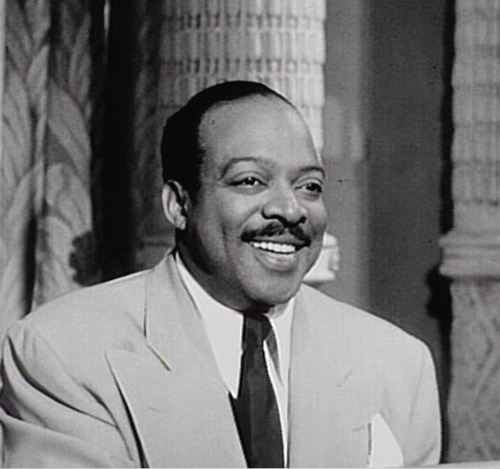
    Count Basie was regarded as one of the most important bandleaders of the swing era. He lived from August 21, 1904 to April 26, 1984. Basie led his popular Count Basie Orchestra for almost fifty years. Both of Basie’s parents were musicians; his father, Harvie Basie, played the mellophone, and his mother, Lillian (Childs) Basie, was a pianist. She gave her son his earliest lessons. Basie also learned from Harlem stride pianists, particularly Fats Waller who taught him how to play organ. 

    In early 1929, Basie played with different bands, eventually settling into one led by Bennie Moten. Basie worked as a soloist before leading a band initially called the Barons of Rhythm. A few of Moten’s former band members joined this nine-piece swing band, among them Walter Page (bass), Freddie Green (guitar), Jo Jones (drums), and Lester Young (tenor saxophone). Jimmy Rushing became the singer. The band gained a residency at the Reno Club in Kansas City and began broadcasting on the radio. An announcer dubbed the pianist “Count” Basie. Basie got his big break when one of his broadcasts was heard by journalist and record producer John Hammond. Hammond touted him to agents and record companies. As a result, the band left Kansas City in the fall of 1936 and took an engagement at the Grand Terrace in Chicago. The next date was in Buffalo, NY, then on to Roseland in New York City. 

    January 1937, Count Basie’s Band made its recording debut on Decca Records. Meanwhile, the band’s recording of “One O’Clock Jump” got its first chart entry in September 1937. The tune became the band’s theme song and it was later inducted into the Grammy Hall of Fame. 

    Basie’s music was characterized by his trademark “jumping” beat and the contrapuntal accents of his own piano. “Stop Beatin’ Round the Mulberry Bush,” with Rushing on vocals, became a Top Ten hit in the fall of 1938. Basie spent the first half of 1939 in Chicago, meanwhile switching from Decca to Columbia Records, then went to the West Coast in the fall. He spent the early ’40s touring extensively, but after the U.S. entry into World War II in December 1941 and the onset of the recording ban in August 1942, his travel was restricted. In 1942 Basie moved to Queens, New York, to be with Catherine Morgan, a famous dancer from Cleveland. They got married in 1943. In his autobiography, “Good Morning Blues,” Basie said he married the girl from Cleveland in 1943 in Seattle. Their honeymoon was a string of one-night band appearances. The Basie band was working in New York when Katy was about to have a baby. She returned to Cleveland and stayed with her parents. Katy and Bill “Count” Basie’s only child, Diane Basie, was born in Cleveland. He rushed to Cleveland to be with his wife and daughter. Later, when they rejoined Basie in New York, he said he had vivid memories of seeing Katy getting off the plane from Cleveland carrying their baby. He said, “It was a special thrill bringing my family home from the airport that day, Old Base, his wife and daughter.” 

    In 1943 while on the West Coast, he started to appear in five films, all released within a matter of months in 1943: Hit Parade of 1943, Reveille with Beverly, Stage Door Canteen, Top Man, and Crazy House. He also scored a series of Top Ten hits on the pop and R&B charts, including “I Didn’t Know About You” (pop, winter 1945); “Red Bank Blues” (R&B, winter 1945); “Rusty Dusty Blues” (R&B, spring 1945); “Jimmy’s Blues” (pop and R&B, summer/fall 1945); and “Blue Skies” (pop, summer 1946). Switching to RCA Victor Records, he topped the charts in February 1947 with “Open the Door, Richard!,” followed by three more Top Ten pop hits in 1947: “Free Eats,” “One O’Clock Boogie,” and “I Ain’t Mad at You (You Ain’t Mad at Me).” 

    Joining ASCAP in 1943, his chief musical collaborators included Mack David, Jerry Livingston, James Rushing, Andy Gibson, Eddie Durham, and Lester Young. His songs and instrumentals also include “Good Morning Blues”; “Every Tub”; “John’s Idea”; “Basie Boogie”; “Blue and Sentimental”; “Gone With the Wind”; “I Ain’t Mad at You”; “Futile Frustration”; “Good Bait”; “Don’t You Miss Your Baby?”; “Miss Thing” “Riff Interlude”; “Panassie Stomp: “Shorty George”; “Out the Window”; “Hollywood Jump: “Nobody Knows”; “Swinging at the Daisy Chain”; and “I Left My Baby”. The big bands’ decline in popularity in the late ’40s hit Basie as it did his peers, and he broke up his orchestra at the end of the decade, opting to lead smaller units for the next couple of years. 

    In the 1950’s, the big band era seemed to be near its end. Basie remained faithful to his beloved Kansas City Jazz style and helped keep the big band sound alive with his distinctive style of piano playing. In 1952, Count Basie increased his band back to the full Big Band sound with his 16-piece orchestra responding to the increased opportunities for touring. For example, he went overseas for the first time to play in Scandinavia in 1954, and thereafter international touring played a large part in his schedule. An important addition to the band in late 1954 was vocalist Joe Williams. The orchestra was re-established commercially by the 1955 album Count Basie Swings – Joe Williams Sings (released on Clef Records), particularly by the single “Every Day (I Have the Blues),” which reached the Top Five of the R&B charts and was later inducted into the Grammy Hall of Fame. 

    Another key recording of this period was an instrumental reading of “April in Paris” that made the pop Top 40 and the R&B Top Ten in early 1956; it also was enshrined in the Grammy Hall of Fame. These hits made what Albert Murray (co-author of Basie’s autobiography, Good Morning Blues) called the “new testament” edition of the Basie band a major success .By the mid-1950s, Basie’s band had become one of the pre-eminent backing big bands for some of the finest jazz vocalists of the time. Tony Bennett, Sammy Davis, Jr. and Frank Sinatra also recorded with Basie. In 1957 Basie released the live album At Newport. At the first Grammy Awards ceremony, Basie won the 1958 awards for Best Performance by a Dance Band and Best Jazz Performance, Group, for his Roulette Records LP Basie. Breakfast Dance and Barbecue was nominated in the dance band category for 1959.

    Basie was nominated for best jazz performance for “Basie at Birdland” in 1961 and “The Legend” in 1962. Iin 1962, Basie switched to Frank Sinatra’s Reprise Records. Sinatra-Basie reached the Top Five in early 1963. It was followed by “This Time by Basie!” Hits of the 50’s and 60’s, which reached the Top 20 and won the 1963 Grammy Award for Best Performance by an Orchestra for Dancing. Basie teamed with various vocalists for a series of chart albums including Ella Fitzgerald (Ella and Basie!, 1963); Sinatra again (the Top 20 album It Might as Well Be Swing, 1964); Sammy Davis, Jr. (Our Shining Hour, 1965); the Mills Brothers (The Board of Directors, 1968); and Jackie Wilson (Manufacturers of Soul, 1968), Broadway Basie’s … Way (1966). Later Basie returned a pure jazz format. His album Standing Ovation earned a 1969 Grammy nomination for Best Instrumental Jazz Performance by a Large Group or Soloist with Large Group (Eight or More). The band had first recorded for Norman Granz on Clef, then moved to Roulette, where it spent its peak years of the late ’50s and early ’60s. When Granz returned to recording activity in 1972 with Pablo Records, it would also mean a final renaissance for Basie, whom Granz recorded magnificently in trio, small band formats as well as with the band. A series of pairings with Oscar Peterson produced some unusually invigorating Basie piano. Basie died April 24, 1984, of cancer, but the band continues playing on today. Count Basie is quote to have said: “All I wanted was to be big, to be in show business and to travel… and that’s what I’ve been doing all my life.”

    Watch Count Basie on U-Tube 

    One O’Clock Jump 

    Count Basie in the film “Hit Parade”, 1943 

    Count Basie in Zuerich, 1959

    Ella Fitzgerald and Count Basie, 1979