
Tag: Peralta Community College

  • Equality is making comeback and business leaders join in to make it happen – Part 2

    Oakland went through a period of decline during in the mid 20th century

    https://youtu.be/Pp7Id9Qo3fU

    Then came the 50s, 60s, and 70s which were a very tough time for Oakland. The city became every more dangerous, crime-ridden, and unlivable. First West Oakland was destroyed by the Nimitz Freeway and the Cypress Viaduct. Many homes and businesses were destroyed creating a period of poverty for West Oakland. Then in the 1960 West Oakland suffered from the construction of BART and the Main Post Office Building on 7th Street. Again local businesses suffered, more jobs and entire neighborhoods were replaced.

    Oakland become the home of the motorcycle gang the “Hell’s Angels” named after Howard Hughes movie, and eventually grew ever more corrupt and crime ridden. Eventually it became the market place of Fred Mitchell who ran a crime symposium changing Oakland into a hotbed for the sale of Crack Cocaine, a very harmful substance that ruined many people’s lives. Additionally, the crime wave sent a lot of middle class inhabitants packing and many of the people who remained lost business. They eventually were unable to keep buildings, street, school and the city services in good repair. Crime attracted more crime and the lack of policing opened the door for more crime.

    By the end of the 70s crime was twice as high in Oakland than it was in San Francisco. Most of the Police Officers were white, frightened and entitled. As a result police brutality created ever more problems. This in turn brought impoverished communities together to forge alliances such as the Black Power Movement to help each other by “policing the police.” They created kindergardens and food pantries for the poor, but grew ever more militaristic. Unfortunately, this turned the city into a gang run town, the Symbionese Liberation Army, the Crips and the Bloods, the People and the Folk, the 35th Street Gang, Norteños, Border Brothers and Sureños.

    From the 1980s to 2000 Oakland suffered from a Crack epidemic that is now rivaled by the Opioid Crisis

    By 2010 it was estimated that Oakland’s population of gang members had grown to over 10,000 members. The situation of both, the crime level, corruption and problems with the police became untenable.

    Education

    Even in 2009 SF Gate reported that Schwarzenegger decided to California ranks 47th in per-pupil spending, according to “Quality Counts,” a report issued Tuesday from Education Week, a national newspaper specializing in public schools. It showed that while the national average is $9,963 per pupil, California spends only $7,571 per pupil and three times that much on prisoners. Vermont spends the most, with $15,139. Utah spends the least, with just $5,964 per pupil.

    Around the state, school administrators have begun looking at how many employees they can lay off next year and which programs they can cancel. Then citizens, business leaders, charities, and religious groups decided to get involved.
  • Equality is making a comeback and business leaders are joining in. Your town can succeed as well. Part 1

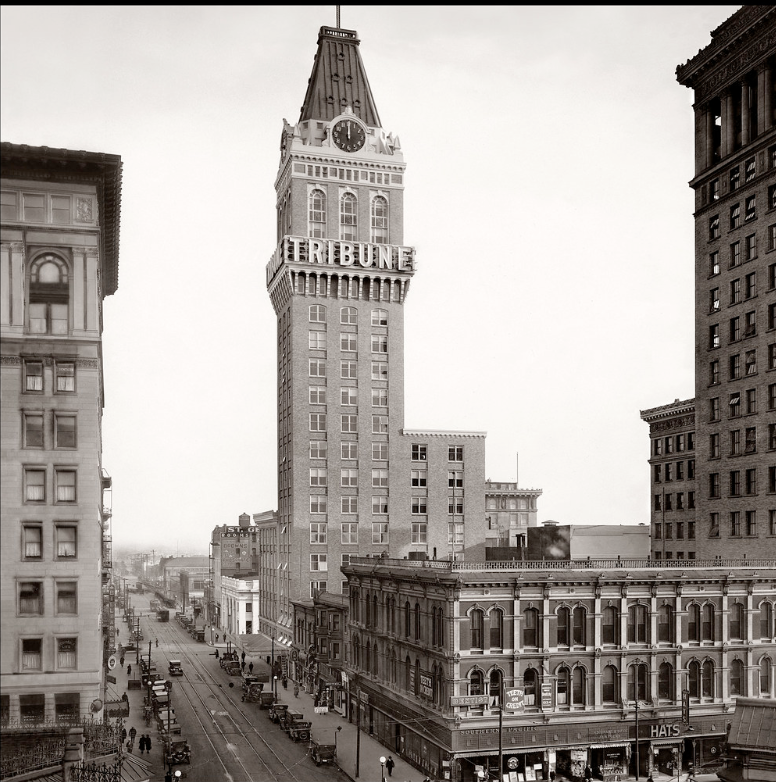
    Oakland was a thriving town about 100 years ago. It went through many phases and now once again is a thriving town.

    Oakland might be a poster child for our future.

    Oakland had a most impressive long history as a thriving industrial center.

    Oakland was first incorporated as a town in 1852. It had always been a popular place for thousands of years before by the Muwekna Ohlone who were part of the original Californians the Miwoks who spent winters near Temescal Creek and Lake Merritt for thousands of years. In 1772 the Spaniards occupied the land in the name of their king. Peralta, a Spanish soldier was deeded 44 thousand acres by the Spanish crown and his deed was confirmed when Mexico declared their independence. The land was divided up by his 4 sons. As much of California this region was covered by Oak trees and this is how it eventually got its name. During the Treaty of Guadalupe Hidalgo in the mid 19th century during the gold rush Mexico gave up the land to the US. Ever more and more squatters ignored the land ownership and a team of Treaty of Guadalupe Hidalgo roving soldiers led by three men from nearby San Francisco established “Contra Costa.”

    In 1853 John Coffee “Jack” Hays took up residence while he served as the sheriff in San Francisco. On March 25, 1854, Oakland was once again incorporated as the City of Oakland with Carpentier one of the San Francisco war lords as the Mayor. However he was quite corrupt and was quickly voted out of office and replaced by Charles Campbell as Mayor on March 5, 1855. Thanks to the fact that the several railroads ended up in Oakland it quickly became a major industrial hub. In 1868, the Central Pacific ended at the Port of Oakland. The Long Wharf also served as the terminus for the Transcontinental Railroad and the Southern Pacific, which was localed initially at  16th Street Station located at 16th and Wood.

    In 1902 a deep channel was created for large ships and this is how Alameda become an Island separated from the mainland. Due to the earthquake and subsequent fires in San Francisco in 1906 the population doubled. This is when Mayor Frank Kanning Mott launched the “Beautiful City project” establishing the many parks, lakes and oak rimmed boulevards the city enjoys to this day. In 1914 he founded the Oakland Civic Auditorium which cost $1.4 Million dollars. It was used briefly as a hospital during the 1918 flue epidemic. Oakland was one of the most wonderful places to live and jobs were plentiful. Employers included General Motors, Chevrolet, Chrysler, and several other major auto companies.

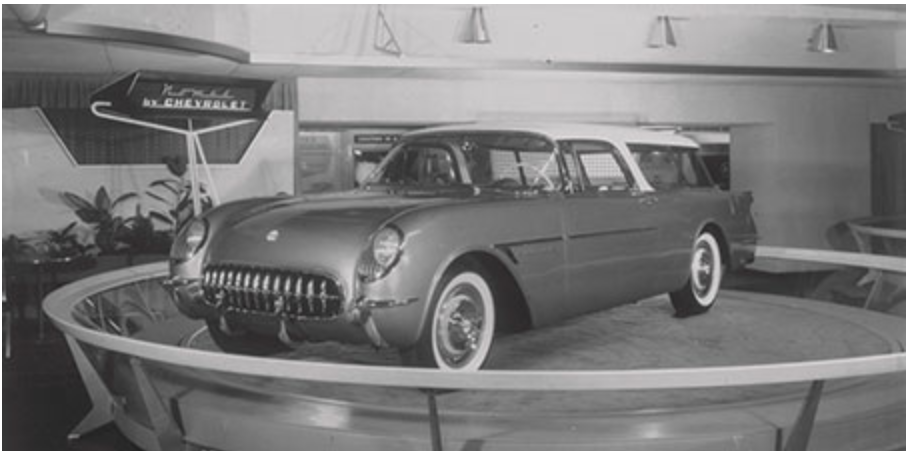
    Motorama “Dream Car” by Chevrolet 1954

    The city also housed companies such as Kaiser, Bechtel, Phelan, Dreyer’s, Rocky Road Icecream, Western Union, Del Monte, and too many others to mention here. The high employment rate and associated growth of a strong middle class allowed Oakland to fashion itself into a world class city with the Golden State Theatre, Fox, Blumenfeld, Orpheum, Turner & Dahnken, the Grand Lake and the Paramount among others. By 1949 Oakland had a seating capacity of over 43 thousand theatre goers. Theatres came and went including the Hippodrome, Lurie, Premier and Roosevelt. Thanks to the start of commercial aviation Amelia Earhart , the Alameda Navel Air Station, and the 1930’s Howard Hughes’ movie the “Hell’s Angels” Oakland was one of the romanticized the epicenter of the West Coast.