Tag: www.riovida.net

  • Artist Highlight – Louis Armstrong

    Louis Armstrong
    Louis “Satchmo” Armstrong

    “What is harder than rock, or softer than water? Yet soft water hollows out hard rock. Persevere.”

    Louis “Satchmo” Armstrong

    Louis Armstrong contracted several books about his life. He enjoyed collaborating with the lawyer, hobby journalist, and jazz historian Robert Gaffin from Belgium.

    “Dear Pal Goffin,” Louis Armstrong wrote to his Belgian acquaintance, the lawyer, hobby journalist, and jazz historian Robert Goffin, on July 19, 1944. “‘Man—I’ve been trying to get in touch with you […]. Here’s another hundred dollars toward the five hundred. […] So accept this hundred and I’ll send the other before a ‘Black Cat can ‘Lick his ‘Buhind’ ….. haw haw haw…” (80).

    Historical records show that actually Louis Armstrong wrote large parts of his own biographies. He then hired Robert Goffin, a white man, to claim them to make sure they could be published. Louis Armstrong realized that his biographies helped his popularity around the world after the heavily ghosted Swing That Music (1936).

    Today we are still able to view many of the quotes in the original French version Louis Armstrong: Le Roi du Jazz (1947) and the English version Horn of Plenty. We are fortunate that large parts of Armstrong’s hand-written manuscript survived. They cover the jazz musician’s life between 1918 and 1931 and were initially published by Thomas Brothers as “The ‘Goffin Notebooks’” in Louis Armstrong, in his Own Words (1999). Horn of Plenty includes most of the events covered in Armstrong’s “Notebooks,” it unfortunately was edited in a way that portrayed Louis Armstrong in a much more primitive way than his actual notes would indicated. Perhaps Griffin thought it was necessary to abide by the culture prejudices of the times.

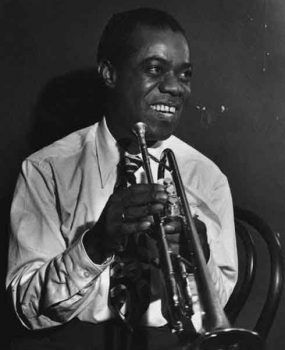
    Louis Armstrong  4 August, 1901 – July 6, 1971, nicknamed Satchmo and Pops, was an American jazz musician. Armstrong was a charismatic, innovative performer whose inspired improvised soloing was the main influence for a fundamental change in jazz, shifting its focus from collective melodic playing, often arranged in one way or another, to the solo player and improvised soloing. One of the most famous jazz musicians of the 20th century, he first achieved fame as a cornet player, later on switching to trumpet, but toward the end of his career he was best known as a vocalist and became one of the most influential jazz singers.

    Armstrong was born into a very poor family in New Orleans, Louisiana. He spent his youth in poverty in a rough neighborhood of uptown New Orleans, as his father, William Armstrong (1881-1922), abandoned the family when Louis was an infant. His mother, Mary Albert Armstrong (1886–1942), then left him and his younger sister Beatrice Armstrong Collins (1903–1987) under the upbringing of his grandmother Josephine Armstrong.

    He first learned to play the cornet (his first of which was bought with money loaned to him by the Karnofskys, a family of Russian Jewish immigrants, that hired Louis to work on their junk wagon.) in the band of the New Orleans Home for Colored Waifs, where he had been sent after (as police records show) firing his stepfather’s pistol into the air at a New Year’s Eve celebration. To express gratitude towards the Karnofskys, Armstrong wore a Star of David pendant for the rest of his life. He followed the city’s frequent brass band parades and listened to older musicians every chance he got, learning from Bunk Johnson, Buddy Petit, Black Benny and above all Joe “King” Oliver, who acted as a mentor and almost a father figure to the young Armstrong. Armstrong later played in the brass bands and riverboats of New Orleans, and first started traveling with the well-regarded band of Fate Marable which toured on a steamboat up and down the Mississippi River; he described his time with Marable as “going to the University”, since it gave him a much wider experience working with written arrangements. When Joe Oliver left town in 1919, Armstrong took Oliver’s place in Kid Ory’s band, regarded as the top hot jazz band in the city.

    In 1922, Armstrong joined the exodus to Chicago, where he had been invited by Joe “King” Oliver to join his Creole Jazz Band. Oliver’s band was the best and most influential hot jazz band in Chicago in the early 1920s, at a time when Chicago was the center of jazz. Armstrong made his first recordings, including taking some solos and breaks, while playing second cornet in Oliver’s band in 1923.

    He and Oliver parted in 1924 and Armstrong moved to New York City to play with the Fletcher Henderson Orchestra, the top African American band of the day. Armstrong switched to the trumpet to blend in better with the other musicians in his section

    He returned to Chicago, in 1925, and began recording under his own name with his famous Hot Five and Hot Seven with such hits as Potato Head Blues, Muggles (a reference to Cannabis or marijuana, for which Armstrong had a lifelong fondness), and West End Blues, the music of which set the standard and the agenda for jazz for many years to come.

    Armstrong had considerable success with vocal recordings, including versions of famous songs composed by his old friend Hoagy Carmichael, Armstrong’s famous interpretation of Stardust became one of the most successful versions of this song ever recorded, showcasing Armstrong’s unique vocal sound and style and his innovative approach to singing songs that had already become standards.

    As with his trumpet playing, Armstrong’s vocal innovations served as a foundation stone for the art of jazz vocal interpretation. The uniquely gritty colouration of his voice became a musical archetype that was much imitated and endlessly impersonated. His scat singing style was enriched by his matchless experience as a trumpet soloist, and his resonant, velvety lower-register tone and bubbling cadences on sides such as “Lazy River” exerted a huge influence on younger white singers such as Bing Crosby.

    After spending many years on the road, he settled permanently in Queens New York in 1943 in contentment with his fourth wife, Lucille Armstrong played more than three hundred gigs a year Armstrong kept up his busy tour schedule until a few years before his death. While in his later years, he would sometimes play some of his numerous gigs by rote, but other times would enliven the most mundane gig with his vigorous playing, often to the astonishment of his band. He also toured Africa, Europe, and Asia under sponsorship of the US State Department with great success and become known as “Ambassador Satch”. While failing health restricted his schedule in his last years, within those limitations he continued playing until the day he died.

    Louis had many nicknames as a child, all of which referred to the size of his mouth: “Gatemouth,” “Dippermouth,” and “Satchelmouth.” During a visit to Great Britain, Louis was met by Percy Brooks, the editor of Melody Maker magazine, who greeted him by saying, “Hello, Satchmo!” (He inadvertently contracted “Satchelmouth” into “Satchmo.”) Louis loved the new name and adopted it for his own. It provides the title to Louis’s second autobiography, is inscribed on at least two of Louis’s trumpets, and is on Louis’s stationery Friends and fellow musicians usually called him Pops, which is also how Armstrong usually addressed his friends and fellow musicians (except for Pops Foster, whom Armstrong always called “George”.

    Some musicians criticized Armstrong for playing in front of segregated audiences, and for not taking a strong enough stand in the American Civil Rights Movement (1955-1968) civil rights movement.

    Armstrong, in fact, was a major financial supporter of Dr. Martin Luther King Jr. and other civil rights activists, but mostly preferred to work quietly behind the scenes, not mixing his politics with his work as an entertainer. The few exceptions made it more effective when he did speak out; Armstrong’s criticism of President Eisenhower, calling him “two-faced” and “gutless” because of his inaction during the conflict over school desegregation in Little Rock, Arkansas in 1957 made national news. As a protest, Armstrong canceled a planned tour of the Soviet Union on behalf of the State Department saying “The way they’re treating my people in the South, the government can go to hell” and that he could not represent his government abroad when it was in conflict with its own people.

    He was an extremely generous man, who was said to have given away almost as much money as he kept for himself. Armstrong was also greatly concerned with his health and bodily functions. He made frequent use of laxatives as a means of controlling his weight, a practice he advocated both to personal acquaintances and in the diet plans he published under the title Lose Weight the Satchmo Way. Armstrong’s laxative of preference in his younger days was Pluto Water, but he then became an enthusiastic convert when he discovered the herbal remedy Swiss Kriss; he would extol its virtues to anyone who would listen and pass out packets to everyone he encountered, including members of the British Royal Family. (Armstrong also appeared in humorous, albeit risqué, advertisements for Swiss Kriss; the ads bore a picture of him sitting on a toilet — as viewed through a keyhole — with the slogan “Satch says, ‘Leave it all behind ya!’“)

    In his early years, Armstrong was best known for his virtuosity with the cornet and trumpet. The greatest trumpet playing of his early years can be heard on his Hot Five and Hot Seven records. The improvisations which he made on these records of New Orleans jazz standards and popular songs of the day, to the present time stack up brilliantly alongside those of any other later jazz performer. The older generation of New Orleans jazz musicians often referred to their improvisations as “variating the melody”; Armstrong’s improvisations were daring and sophisticated for the time while often subtle and melodic. He often essentially re-composed pop-tunes he played, making them more interesting. Armstrong’s playing is filled with joyous, inspired original melodies, creative leaps, and subtle relaxed or driving rhythms. The genius of these creative passages is matched by Armstrong’s playing technique, honed by constant practice, which extended the range, tone and capabilities of the trumpet. In these records, Armstrong almost single-handedly created the role of the jazz soloist, taking what was essentially a collective folk music and turning it into an art form with tremendous possibilities for individual expression.

    In 1964, Armstrong knocked the Beatles off the top of the Billboard Top 100 chart with Hello, Dolly (song)”, which gave the 63-year-old performer a U.S. record as the oldest artist to have a #1 song.

    Hello Dolly performed in Germany

    In 1968, Armstrong scored one last popular hit in the United Kingdom with the highly sentimental pop song What a Wonderful World, which topped the British charts for a month; however, the single did not chart at all in America. The song gained greater currency in the popular consciousness when it was used in the 1987 movie Good Morning Vietnam, its subsequent re-release topping many charts around the world.

    It’s a Wonderful World

    Louis Armstrong died of a heart attack on July 6 1971, at age 69, the night after playing a famous show at the Waldorf Astoria’s Empire Room. He was residing in Corona, Queens, New York City, at the time of his passing. He was interred in Flushing Cemetery, Flushing, in Queens, New York City.

    Today, the house where Louis Armstrong lived at the time of his death (and which was declared a National Historic Landmark in 1977) is a museum. The Louis Armstrong House & Archives, at 34-56 107th Street (between 34th and 35th Avenues) in Corona, Queens, presents concerts and educational programs, operates as an historic house museum and makes materials in its archives of writings, books, recordings and memorabilia available to the public for research. The museum is operated by the City University of New York’s Queens College, following the dictates of Armstrong’s will.

    The influence of Armstrong on the development of jazz is virtually immeasurable. Yet, his irrepressible personality both as a performer, and as a public figure later in his career, was so strong that to some it sometimes overshadowed his contributions as a musician and singer.

    As a virtuoso trumpet player, Armstrong had a unique tone and an extraordinary talent for melodic improvisation. Through his playing, the trumpet emerged as a solo instrument in jazz and is used widely today. He was a masterful accompanist and ensemble player in addition to his extraordinary skills as a soloist. With his innovations, he raised the bar musically for all who came after him.

    Armstrong is considered by some to have essentially invented jazz singing. He had an extremely distinctive gravelly voice, which he deployed with great dexterity as an improviser, bending the lyrics and melody of a song for expressive purposes. He was also greatly skilled at scat singing, or wordless vocalizing. Billie Holiday and Frank Sinatra are just two singers who were greatly indebted to him. Holiday said that she always wanted Bessie Smith’s ‘big’ sound and Armstrong’s feeling in her singing.

    On August 4, 2001, the centennial of Armstrong’s birth, New Orleans’ airport was renamed Louis Armstrong International Airport in his honor.

    http://en.wikipedia.org/wiki/Louis_Armstrong
    http://www.satchmo.net/
  • “Making America Great Again” interesting chapters: Secretary of State

    World Peace in the hands of Tillerson?
    World Peace in the hands of Tillerson?

    This video is a must watch!

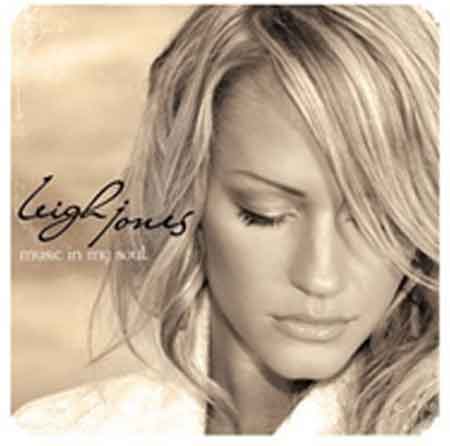
  • Leigh Jones Debut CD “Music In My Soul”

    Leigh Jones "Music in our Soul"
    Leigh Jones “Music in our Soul”

    We recommend you listen to this new album and go to Leigh Jones’ performance when she comes to town. She reminds us why the UC Jazz Ensembles must have vocals lessons again. The world needs female vocalists like Leigh Jones that have intelligence and poise. 

    “Music in my Soul” debuted with 13 tracks. What’s interesting about Jones is that she doesn’t seem to fall into the studio pre-fab, female pop singers, who sometimes don’t have the musical chops to back it up. Her CD is worth taking a listen to. If you give her a chance, you may be hooked in enough to listen to the entire CD, like I was. It definitely has a mellow, jazzy feel to it. Some standout tracks: “Music,” “Free Fall” “All This Love,” “Have it Your Way,” “Sick of Fools” and “I’m Leavin’ You.” Copy Editor Felicia, CNN.com 

    Only once in an era does a young performer come along who is so dazzling, so captivating and so undeniable in their talent that they gather the gale force of the most respected icons in the business beneath their wings. Los Angeles-based singer/songwriter Leigh Jones is that amazing once in a lifetime artist. Jazz HQ 

    With wide ranging musical influences from Ella Fitzgerald, Billie Holiday, and Marvin Gaye, to D’Angelo, Jill Scott and Joss Stone, Leigh Jones has managed to carve out a niche in the extremely competitive world of the music business.  Her debut album on Peak Records entitled “Music In My Soul” is a definitive statement from this dynamic, new artist. Very personal in nature, this album features the unique song styling that is sultry, sexy and insightful. Her rich, soulful style mixed with jazz and R & B influences create a distinct retro sound throughout the album. Kerry Gordy, KGE Entertainment, manages her career and produced her album with assistance of Lorenzo Pryor, Bruce Fisher, and input from his father Berry Gordy. 

    David Nathan of Soul Music asked Leigh Jones: “How did you originally meet Kerry Gordy?” Leigh Jones answered: When I was at a performing arts school in Los Angeles, I worked with a producer, Lorenzo Pryor. We recorded a few things as a way for me to get my foot in the door but I shook my head because the kind of things we were doing were a little ‘punk’-y and not really where my heart was musically. I worked with some other producers who were looking more for a Britney Spears/Christina Aguilera kind of singer and I was not going to be slithering around onstage! 

    Lorenzo told me he had a good friend, Kerry(Gordy), who was looking for a project and after we met, he told me, ‘100 girls came in before you.’ The next day, we were recording! “Sick Of Fools” was one of the first three songs we ever did together.

    Everything started from there. Since last September the CD shot up the charts to rave reviews, deservedly so. The CD features songs that are heartfelt, have intelligent and timely lyrics, with a sound that gives you the feeling instantly that you are listening to a classic hit album. Kerry Gordy and Leigh Jones successfully bring intelligence back into their new music while keeping this jazzy CD young and fresh. Watch her “Free Fall” video on U-tube MORE

    “A star is born! Finally, a fresh voice, a musical talent not seen for at least a generation. I am stunned. Ms. Jones has the voice, the musical training and the expressive feeling to interpret the songs well chosen for this album.”
    -Raymondo, A reviewer, www.barnesandnoble.com

    “blue-eyed soul.” Once a label applied to white musicians who sang with an R&B influence, it’s been tossed around so often that any non-black performer, is labeled as such. Fortunately for true soul fans, Leigh Jones overcomes this cliché with her exquisitely enjoyable debut, Music in My Soul.
    -Melody Charles, Soul Tracks

    “Leigh Jones wins!!! “Favorite Female Breakout Artist of the Year Award” by the “American Society of Young Musicians” in Las Vegas along with Justin Timberlake and Wayne Newton.”
    -ASYM, 16Th Annual ASYM Awards

    “Throughout my career I have been blessed to discover many great musical talents. I feel Leigh Jones is destined to be one of the next great stars. She can do it all – Pop, R&B, Jazz and Blues. She’s awesome!” -Berry Gordy
    -Berry Gordy, Music in My Soul

    Talking Smooth Jazz welcomes, singer/songwriter and new Peak Records recording artist Leigh Jones. Destined to be herald as possibly the most naturally soulful white female R&B singer since Teena Marie.”
    -Robin Loves Music, A reviewer, Talking Smooth Jazz 

    THIS LADY IS QUITE SIMPLY THIS LADY IS QUITE SIMPLY STUNNING. Everyone should buy 2 cds cause you are definitely gonna wear out the first one. GO BUY THE CD Lets have a crossover hit. “
    -Dave the Rave, Soul Tracks MORE 

  • Artist Highlight – Oscar Peterson

    Oscar Peterson

    “The music field was the first to break down racial barriers, because in order to play together, you have to love the people you are playing with, and if you have any racial inhibitions, you wouldn’t be able to do that.” ~ Oscar Peterson

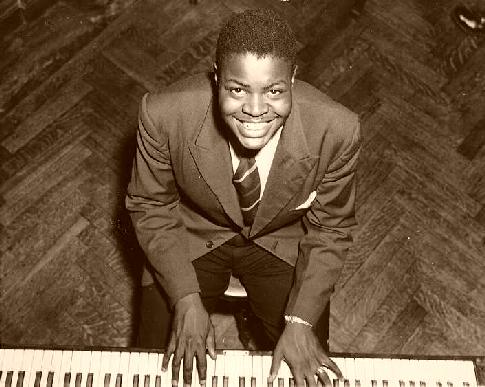
    Internationally renowned jazz pianist Oscar Peterson was called the “Maharaja of the keyboard” by Duke Ellington, “O.P.” by his friends, and was a member of jazz royalty. He released over 200 recordings, won seven Grammy Awards, and received other numerous awards and honors over the course of his career. He is considered to have been one of the greatest pianists of all time, who played thousands of live concerts to audiences worldwide in a career lasting more than 65 years. 

    Oscar Peterson was born on August 15, 1925 in Montreal, Canada. His father, Daniel Peterson, a porter with Canadian Pacific Railways, lived in Canada since 1917. He met Oscars’ mother, Kathleen Olivia John, in Montreal, where she was domestic worker. They had five children. 

    Daniel Peterson was an avid musician and insisted that all five of his children studied music. Oscar began playing the trumpet at the age of five. He got tuberculosis and spent 14 months in the hospital. His lungs became quite damaged so he could no longer play the trumpet. So he chose to play the piano. Their father, who learned to play piano on his own while in the Merchant Marine Academy, taught his children all he could until they achieved a certain proficiency. During his high school years, Oscar studied with an accomplished classical pianist, Hungarian Paul de Marky, a student of Istvan Thomán who was himself a pupil of Franz Liszt. Oscar Peterson’s training was predominantly based on classical piano, with inspirations from the Well Tempered Clavier, the Goldberg Variations, and the The Art of Fugue, as these piano pieces are essential for every serious pianist. Meanwhile Oscar Peterson was captivated by traditional jazz and learned several ragtime songs, especially the boogie-woogie. At that time Peterson was called “the Brown Bomber of the Boogie-Woogie.” Paul de Marky encouraged Oscar to believe that he had something special to give to the music world. At age nine Peterson played piano with control that impressed professional musicians. For many years his piano studies included four to six hours of practice daily.

    Art Tatum a very famous pianist during that era was introduced to Oscar by his father who played Art Tatum’s Tiger Rag record for him. Oscar was so intimidated by what he heard that he didn’t touch the piano for a month. At 14 years of age, Oscar’s older sister Daisy Sweeney a notable classical piano teacher scheduled an audition for a CBC (Canadian Broadcasting Corporation) national amateur contest. Oscar won the competition. This opened the doors to performances on a weekly broadcast show, on a Montreal radio station, called Fifteen Minutes’ Piano Rambling and later performances on a national CBC broadcast called The Happy Gang. He regularly played with the Montreal High School Victory Serenaders which included trumpeter Maynard Ferguson. Oscar Peterson had permission to play the baby grand piano during the lunch hours and in his words this was “the best way to have a bunch of girls come down. I became the guy.” 

    Peterson expanded his classical piano training and broadened his range while mastering the core classical pianism from rigorous scales to such staples of every pianist’s repertoire as preludes and fugues by Johann Sebastian Bach. He also worked on emulating Art Tatum’s pianism and aesthetics. Peterson also absorbed Tatum’s musical influences, notably from piano concertos by Sergei Rachmaninoff. Rachmaninoff’s harmonizations, as well as direct quotations from his second piano concerto, are thrown here and there in many recordings by Peterson, including his work with the Ray Brown and Herb Ellis Trio, such as “When Your Lover Has Gone”. Other artists who influenced Oscar during the early years were Teddy Williams, Nat (King) Cole, and James P. Johnson.

    In 1944 Oscar married his year long girlfriend by the name of Lillie Fraser. In late 1947 Oscar led a trio at the Alberta Lounge in Montreal. Once a week a local radio station broadcast his show live from The Alberta. Norman Granz, the producer of Jazz at the Philharmonic, heard the broadcast on the Radio and was so impressed that he told the cab driver to take him to the studio. Oscar’s life would change dramatically. Norman Granz took Oscar to New York to play as a surprise guest at the Carnegie Hall performance of his Jazz at the Philharmonic. Oscar came up from the audience that night and played a duet with bassist Ray Brown which thrilled the audience and critics alike. Thus began Oscar’s lifelong relationship with Mr. Granz.

    Soon after his appearance at Carnegie Hall Oscar was invited to join the Jazz at the Philharmonic. They toured North America. After a few years Oscar Peterson set up his own trio. Granz and Peterson developed a deep and lasting friendship. Is was much more than a managerial relationship; Peterson praised Granz for standing up for him and other black jazz musicians in the segregationist south of the 1950s and 1960s. For example, in the Canadian Broadcasting Company’s two-part documentary video Music in the Key of Oscar, Peterson tells how Granz stood up to a gun-toting southern policeman who wanted to stop the trio from using “white-only” taxis. Oscar Peterson and his trio worked incredibly hard and were considered one of the best jazz trios in the world. While playing at a club in Washington DC, Oscar Peterson met his idol Art Tatum. They became close friends and played for each other on many occasions. Oscar was joined by several people in his trio, each group having a distinct feel and flavor. Oscar especially enjoyed playing with Ed Thigpen on drums. He describes this time as “…six years of unbelievable music.” Eventually Oscar would regularly play with the greatest jazz artist of his era of Ella Fitzgerald, Dizzy Gillespie, Count Basie, Nat King Cole, Louis Armstrong, Duke Ellington, Roy Eldridge, Charlie Parker, Barney Kessel, Herb Ellis, Joe Pass, Ray Brown, Niels-Henning Ørsted Pedersen, Clark Terry, Coleman Hawkins, Ben Webster, Milt Jackson, Stéphane Grappelli, Anita O’Day, Fred Astaire, Irving Ashby, Herbie Hancock, Bennie Green, Keith Emerson, Stan Getz, Louis Hyes, Bobby Durham, Ray Price, Sam Jones, George Mraz, Martin Drew, David Young, Alvin Queen and Ulf Wakenius. 

    He was made an Officer of the Order of Canada in 1972, and promoted to Companion, its highest rank, in 1984. He is also a member of the Order of Ontario, a Chevalier of the Ordre du Québec, and an officer of the French Ordre des Arts et des Lettres.

    His work has earned Oscar Peterson seven Grammy awards over the years and he was elected to the Canadian Music Hall of Fame in 1978. He also belongs to the Juno Awards Hall of Fame and the Canadian Jazz and Blues Hall of Fame. He has received the Roy Thomson Award (1987), a Toronto Arts Award for lifetime achievement (1991), the Governor General’s Performing Arts Award (1992), the Glenn Gould Prize (1993), the award of the International Society for Performing Artists (1995), the Loyola Medal of Concordia University (1997), the Praemium Imperiale World Art Award (1999), the UNESCO Music Prize (2000), and the Toronto Musicians’ Association Musician of the Year award (2001).

    In 1993, Oscar suffered a serious stroke that weakened his left side and sidelined him for two years. However he has overcome this setback and started touring, recording and composing again. In 1997 he received a Grammy for Lifetime Achievement and an International Jazz Hall of Fame Award, proof that Oscar Peterson is still regarded as one of the greatest jazz musicians ever to play. 

    Oscar Peterson passed away on December 23, 2007 with his dog “Smedley” named after his dear friend Norman Granz by his side. He had seven children by four wives. Soon after Peterson’s death, the University of Toronto Mississauga opened a major student residence in March 2008 as “Oscar Peterson Hall.”